Reality, reframed.
When digital content stops looking digital.
Samsung Spatial Display — experienced by CaesarTechs.
© CaesarTechs
Traditional signage communicates information. Spatial Display creates presence.
Depth read by the naked eye the moment someone walks past — nothing to wear, nothing to download.
The subject sits forward of the background, so a message is felt as presence before it is read as text.
Approximately a 2-inch body per Samsung's positioning — flush enough for a finished architectural wall.
A window, lobby or booth centrepiece that lands like a physical prop build, without the prop build.
Samsung VXT drives scheduling, playlists, device health and remote control across every location.
Standard bracketry, standard power and data — signage logistics, not scenic logistics.
Dwell time earned by curiosity: visitors stop, move around the content and look again.
A format upgrade for brands whose flat screens no longer differentiate them from the shop next door.
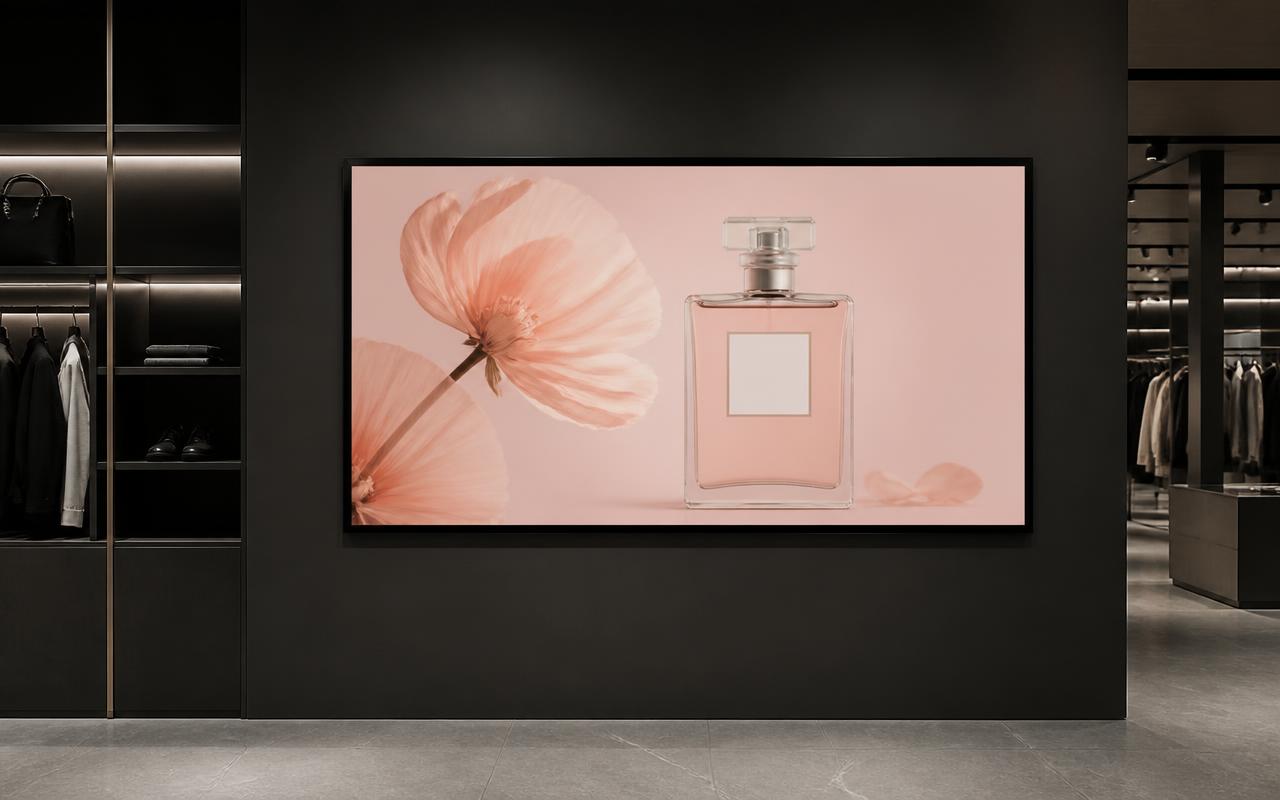
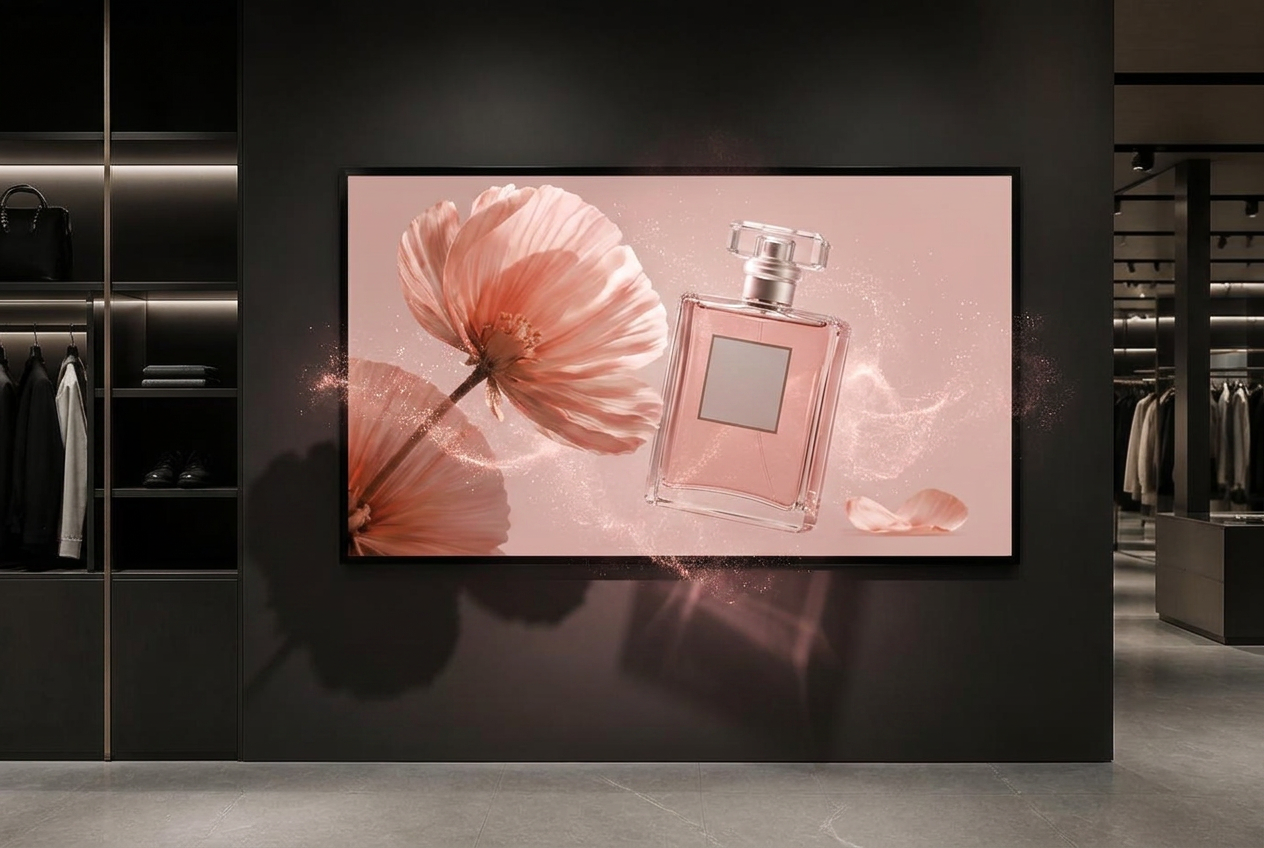
The same campaign, two experiences.
Drag the handle. Left is a conventional flat signage layout; right is the same idea rebuilt as a spatial experience. Conceptual visualisation for illustration.
Eight places where the screen stops being a screen.
Real installations, real rooms. Move across any frame to see the subject leave the panel, pull the depth slider from flat to spatial, then open the matching application.
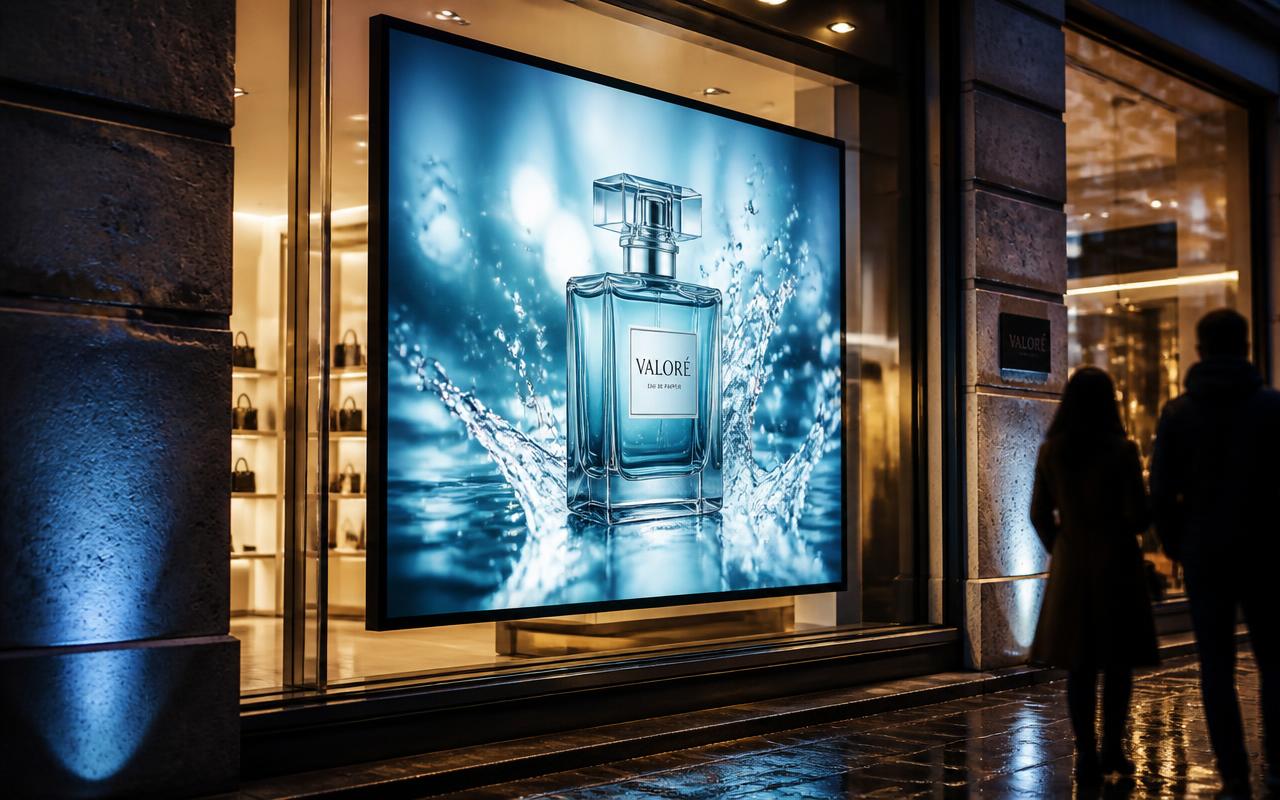
The shop window
The campaign product stands in the window with real volume — no prop build, no plinth, changed by schedule instead of by carpenter.
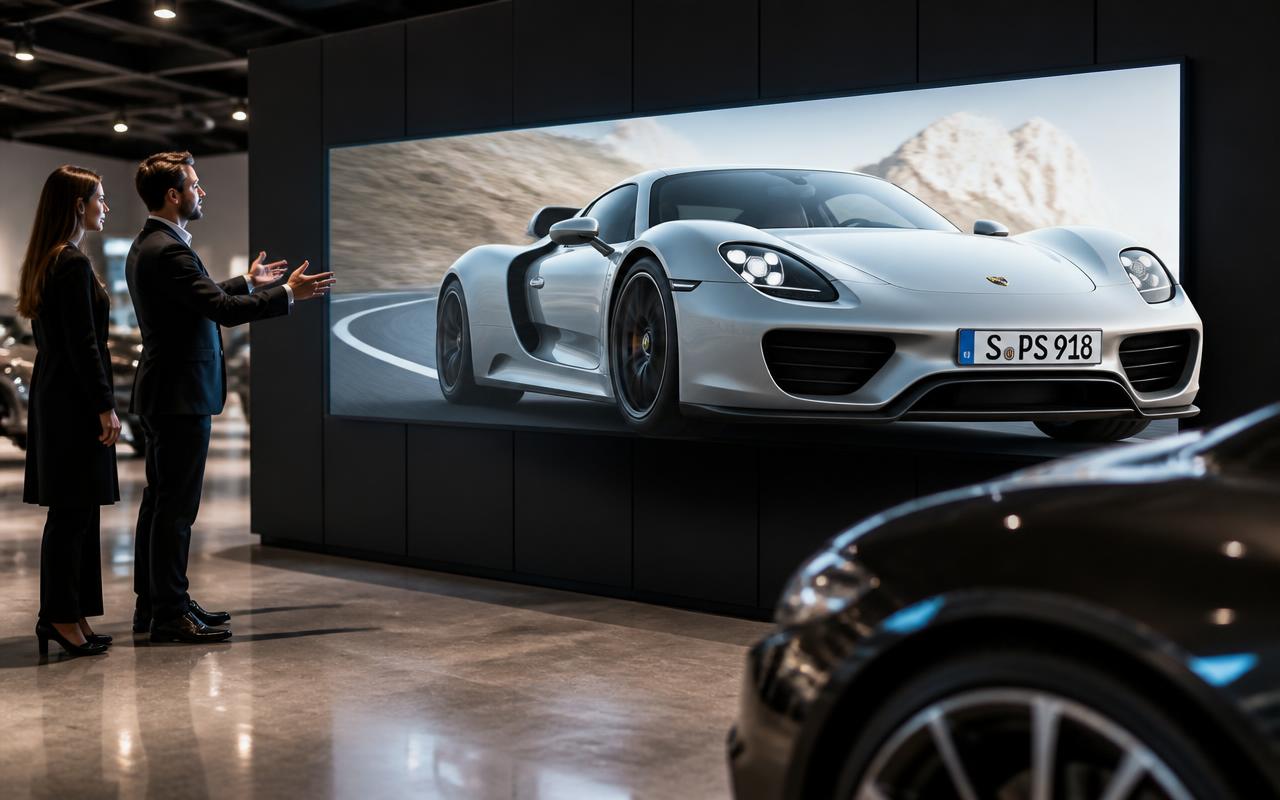
The showroom wall
Trim, wheel and colour options presented at showroom scale, so a car that is not on the floor is still in the room.
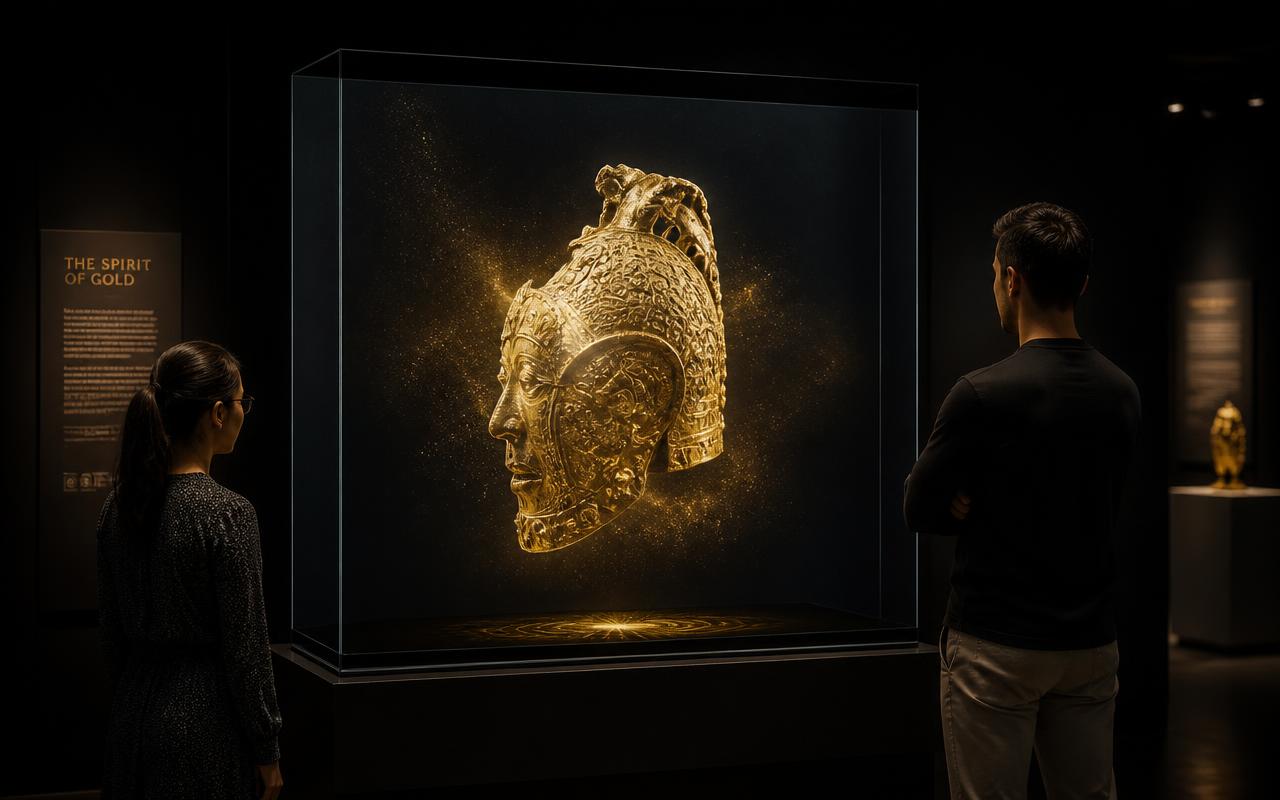
The gallery case
Objects too fragile or too far away to exhibit, presented in depth at the exact scale of the original.
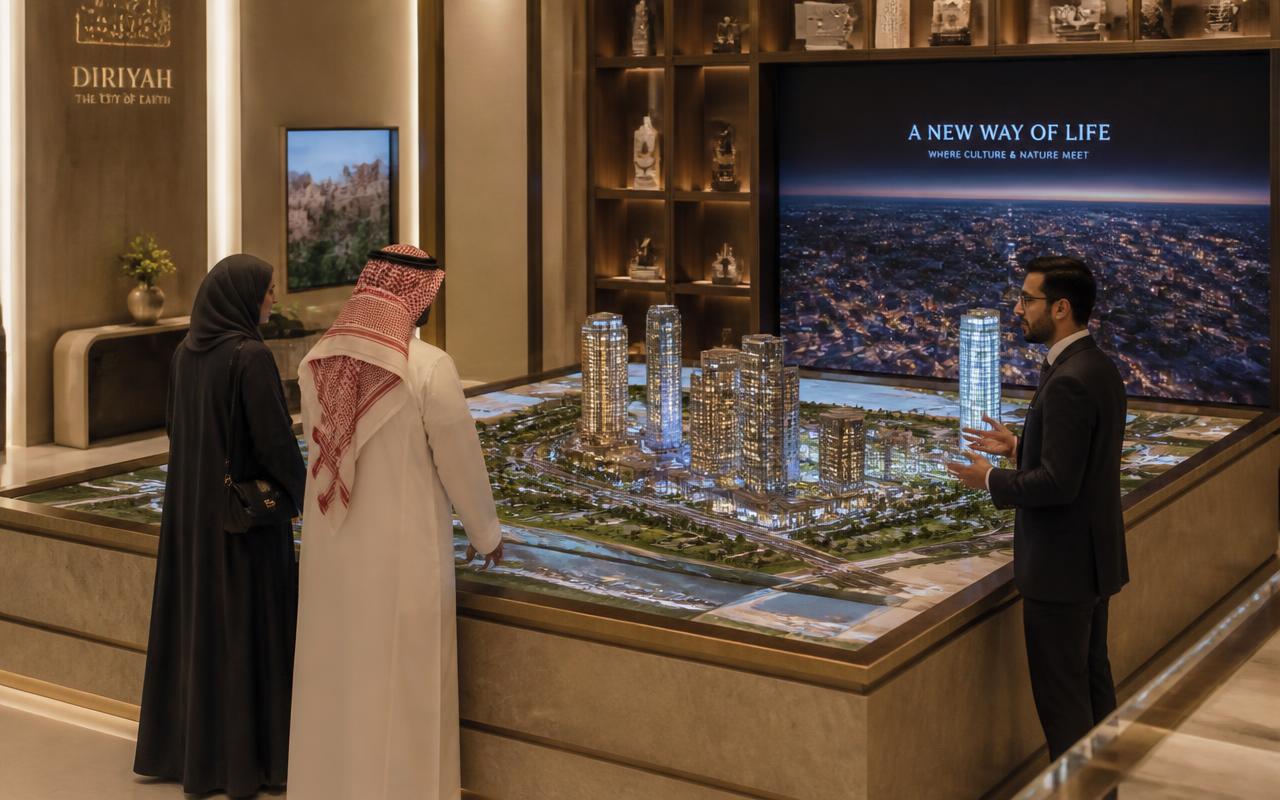
The sales gallery
Towers, podium and amenity levels read as a model the buyer can judge — beside the physical maquette, not instead of it.
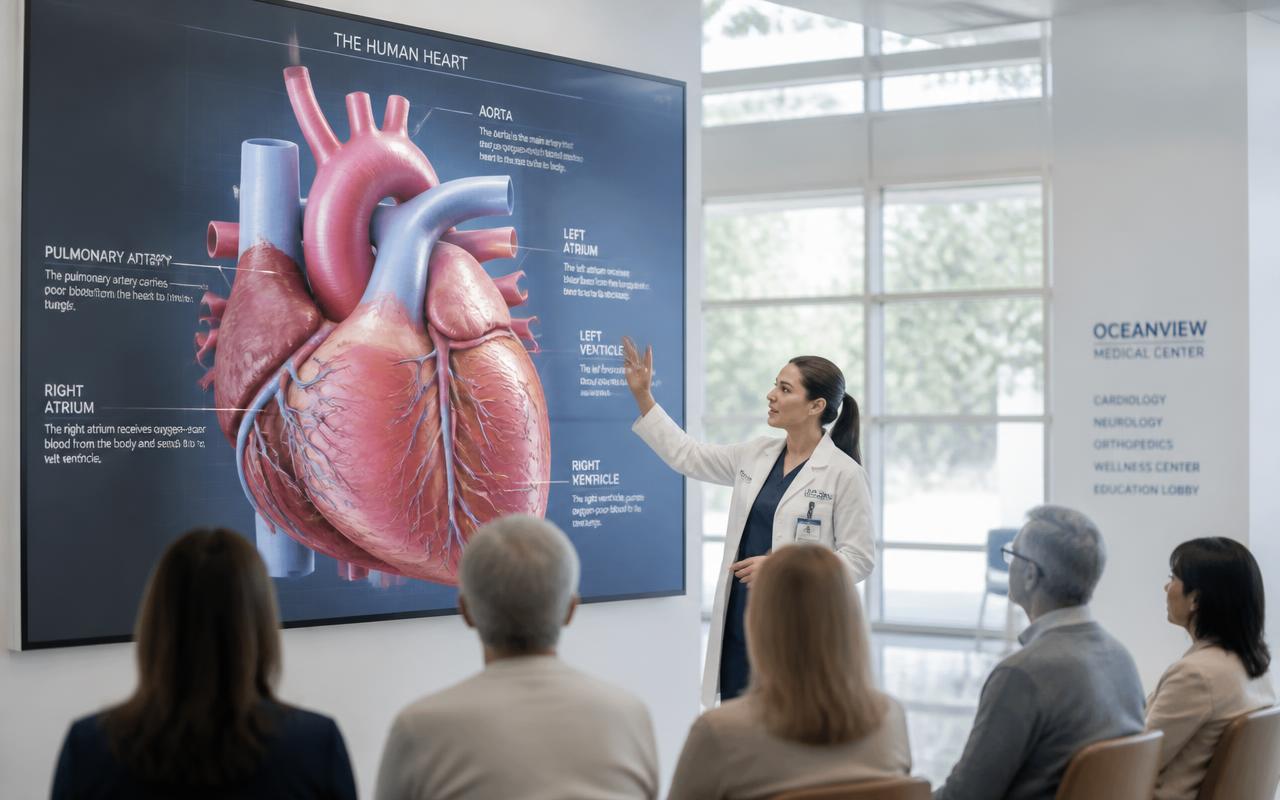
The education lobby
A clinician turns a procedure into something a patient and their family can actually see, in one room, with no headsets.
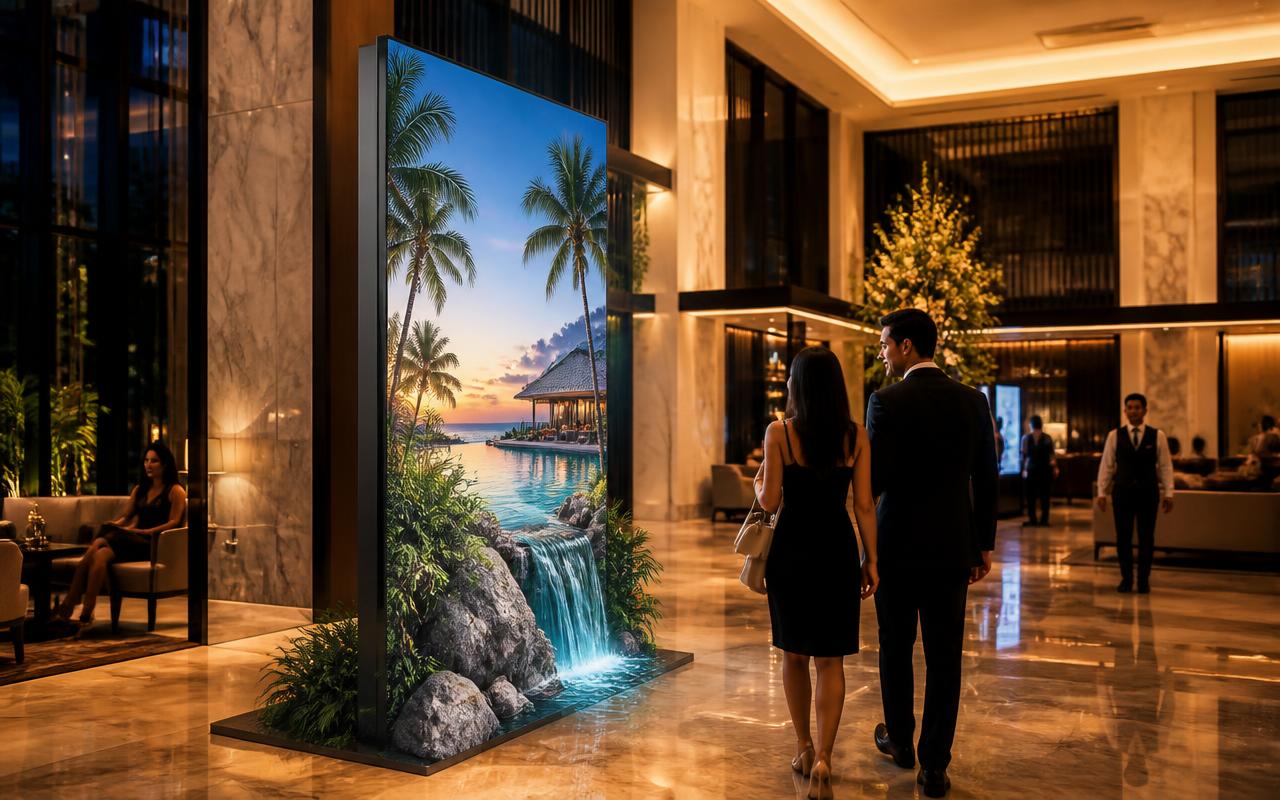
The hotel lobby
Suites, spa and dining shown as places rather than posters, in the ninety seconds a guest spends waiting at reception.
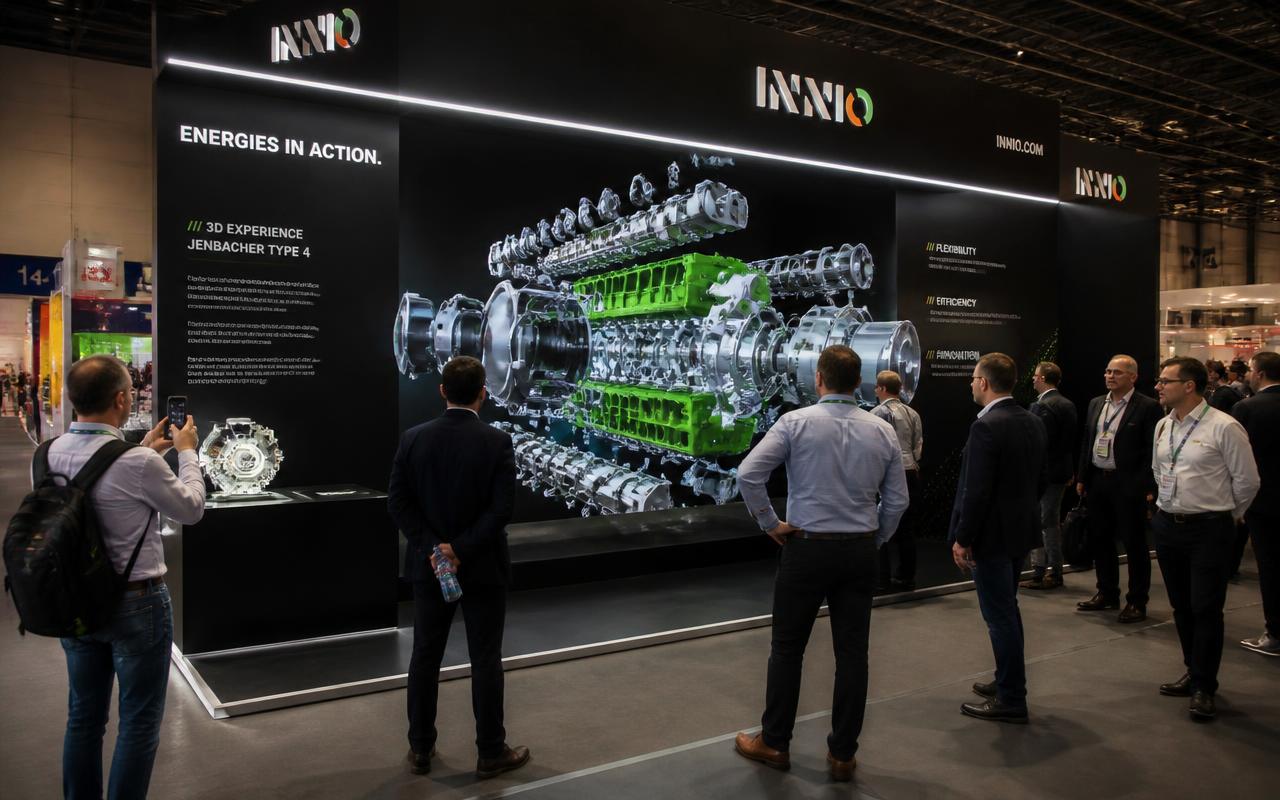
The exhibition stand
The exploded assembly floats in front of the panel and holds the aisle — impact that ships as a display, not a scenic truck.
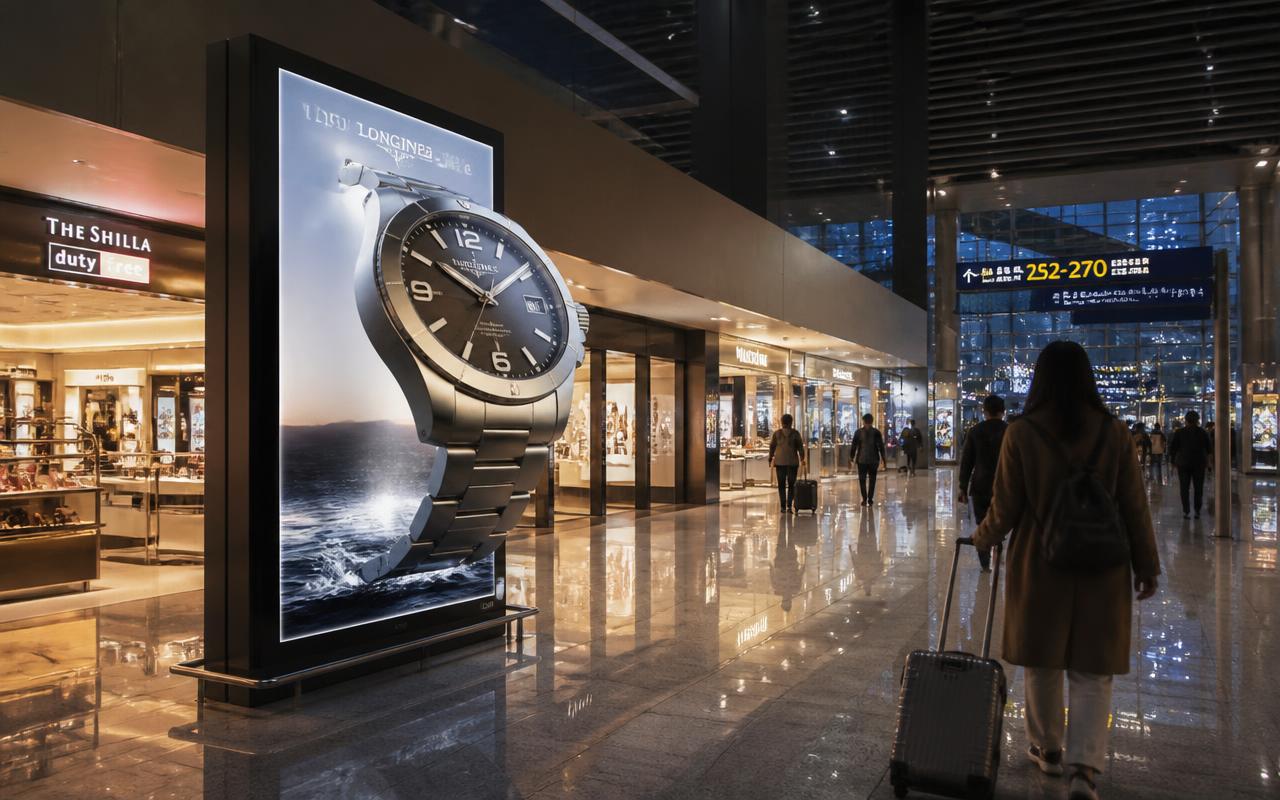
The terminal concession
High-dwell brand placement where the product itself leans out of the frame as travellers pass it.
Where depth changes the outcome.
The window becomes the product
A hero SKU presented with volume in the shop window, changed by campaign rather than by prop build.
The screen is only half the experience.
The hardware creates the possibility. The content creates the effect. This is the path every campaign takes before it reaches the panel.
Your existing campaign artwork, product photography or video master.
Subject isolation, layer separation and depth grading by the CaesarTechs studio.
A loop engineered for the panel, the room and the distance your audience stands at.
We do not just supply the display. We build the experience.
CaesarTechs transforms your product, architecture, data or story into content engineered for spatial display — layered, depth-graded and timed for the space it plays in.
Samsung positions Spatial Display as delivering immersive three-dimensional visuals to the naked eye — no glasses, no headset, no companion app for the viewer.
Samsung describes the spatial effect being achieved within a slim body of approximately 2 inches, so the panel sits close to the wall like conventional signage.
Content is rendered so foreground subjects read with volume and separation rather than as a flat image on the panel plane.
Samsung positions installation as comparable to standard professional signage — no bespoke optical rig or specialist scenic build.
Content scheduling, playlists, device health and remote device control run through Samsung VXT, Samsung's cloud content and device management platform.
Screen sizes, resolutions, brightness, viewing distance and connectivity are confirmed against current Samsung documentation for the exact model quoted.
- Application design — where the display goes, what it shows, who it is for
- Spatial content concept, storyboard and art direction
- 3D / CGI production, product visualisation and motion graphics
- Depth grading, layer separation and loop engineering
- System integration: mounting, power, data, sources, control
- Samsung VXT onboarding, playlists, scheduling and remote operation
- Commissioning, handover training and Kingdom-wide support
Samsung Spatial Display is a Samsung Electronics product. CaesarTechs designs the application, creates the content, integrates the system, deploys the solution and supports the customer.
From screen to experience.

Samsung Spatial Display — complete profile.
A cinematic, dark-theme PDF profile of the Samsung Spatial Display experience — co-branded Samsung × CaesarTechs, watermarked and stamped with a CaesarTechs digital seal and unique document serial.
- Samsung-published product positioning
- Flat vs spatial comparison matrix
- 14 sector applications with CGI plates
- Content studio pipeline & VXT operation
- Delivery journey and contact scope
Plan it with the CaesarTechs AI partner.
SAM answers with verified Samsung positioning for product capability, and with CaesarTechs scope for design, content and integration.
Reality, reframed.
Samsung Spatial Display — experienced by CaesarTechs.
Beyond digital signage.
Live demonstrations are scheduled with the CaesarTechs Experience Center team subject to demo unit availability. Experience Center →